Sunday, May 4, 2014

I love my new job.

I've been a real slacker on this blog, and for that I apologize. In fact, I apologize for my last post complaining about apartment hunting. I'm embarrassed that I sound like an American brat, but it seems to be tradition on this blog to bitch about apartment hunting when I move to a new city.

I ended up finding a great place with a wonderful landlady. She often welcomes me home at the end of the day with a snack and, most recently, a whole bag of mangoes. While she doesn't speak a word of English, her children (who are about my age) speak English fluently and have even studied and/or worked abroad in the US and Japan. One of them studied in Boston on a Fulbright! We sometimes hang out on the ground floor of the building. They are wonderful people.

So, what am I doing in Cambodia? I work for an NGO transitioning into a for-profit enterprise (or are they just starting a for-profit wing? I'm a bit unclear on that). My organization approaches water and sanitation challenges with market-based solutions. Basically, we sell toilets, water filters, and handwashing devices to rural consumers. (People tend not to value--and thus not to use or repair--a product they receive for free.*) Therefore, a lot of our work involves creating demand for water and sanitation products; we are actually among the leaders worldwide in what is called "sanitation marketing."

*I recognize this statement is an oversimplification and not always true but I don't feel like getting into all that right now.

The products we sell were designed in collaboration with a famous design firm in San Francisco, but now my organization wants to build an in-house design team rather than rely on external consultants. I was hired to build and lead this team. I'm in the middle of recruiting Cambodian engineers, and it's really weird to be on the other side of hiring so soon after going through the job hunting process.

I will be working on a number of products. Our flagship product in Cambodia is a simple pour-flush pit latrine, since approximately 80% of rural Cambodians do not have access to toilets and must practice open defecation. We've already sold over 70,000 latrines nationwide. However, the primary obstacle to widespread toilet adoption is the high price of the latrine shelter that is attractive to consumers (cheaper shelters are available but people don't want them and prefer to have no toilet than a toilet with the cheaper shelter). My first challenge is to come up with an affordable latrine shelter that meets the consumers' needs and desires. In the future I will be working on "infant and young child feces management" products (a.k.a. potties), a larger version of our handwashing device for schools, health clinics, refugee camps, etc (our current device is household-size), and a household rainwater harvesting kit.

I love my job. I get both the engineering and the social science, the physics and the field work. I have already been traveling a lot. I've been out in "the provinces" three times (people say "the provinces" when they mean anywhere but Phnom Penh; usually it refers to rural areas) and to Vietnam--and it's been only 5 weeks. I will be working closely with manufacturers, which is the biggest hole in my experience, so hopefully I will learn a ton and gain new useful skills. And my coworkers are lovely. I mean, how could I not love a job where my boss pretends to poop?

This is my boss.

My life is a little boring outside of work, because I don't have any non-work friends yet. To be honest though, I'm really enjoying the alone time right now, burying myself in books about Indochina and watching my favorite TV shows. But I think soon I might go a little stir-crazy, so I should probably start trying to meet people. I learned about a Hindi/Urdu conversation group recently, so I might join to meet other people interested in India (I would be lying if I said I didn't miss India every day) and of course to brush up on my Hindi.

Speaking of languages, I have started Khmer lessons. In some ways the language is difficult--the pronunciation is pretty much impossible for my American tongue--but in other ways it's not so difficult. For example, there appear to be no tenses or verb conjugation. So vocabulary is hard but grammar is easy. My tutor is fantastic and classes are pretty fun.

And now for some photos:

The edge of a market in Kampong Cham province

The infamous fried spiders. Cambodians started to eat spiders and other bugs to fend off starvation during the Khmer Rouge when there was no other food available. I'm not sure why people still eat them. Apparently the legs are the tastiest part.


Adorable family in a village in Kampong Cham province.

Another adorable family in Kampong Cham province.


This guy climbed a tree to pick some coconuts for us to drink.

Volleyball is the most popular sport in Cambodia. This surprised me, since I didn't realize volleyball was popular anywhere.

A typical village home in Cambodia sits on stilts.
A typical poor family's home is made of palm leaves rather than wood.
Rural households typically store their water in giant jugs like these.

In rural Cambodia, iced coffee comes in bags. Lindsay (pictured) and I love Cambodian iced coffee. 

This is where village women give birth--if they come to the clinic at all. It was even more terrifying in person.

Napping in a hammock is a favorite pastime in the hot season.

Children play on a mountain of scraps from the nearby garment factories in Kampong Speu province.

Mai, Lindsay, and me with our host family in a village in Kampong Speu province

In Vietnam we held meetings under the watchful eye of Uncle Ho. (That's Ho Chi Minh, in case that's not clear.)

More posts coming soon. I have so much to catch you up on!


Tuesday, March 18, 2014

Finally got a job ...in Cambodia!

Unemployment has come to an end. I got a job! In Phnom Penh! I'll be designing water and sanitation products with communities in rural Cambodia and I'm super excited about it. I move on Friday!

It's crazy to me that I'm moving to a totally new country (that is, a country that is not India). I've been in and out of India for almost seven years now. In my work and research I have only ever thought about India. I studied Hindi for a while. I minored in South Asian Studies as an undergrad. I have lots of friends in India. I have an entire Indian wardrobe of salwar kameezes and saris. I know the train system like the back of my hand. Every time I land in Delhi, I feel like I'm coming home. I felt committed to India for so long--in some ways, I still feel very committed to India--and it feels weird to be going somewhere else.

I'm afraid I'll project India onto Cambodia. When I went to Oaxaca, Mexico, I was called out on comparing everything to India. "Not every developing country is the same," I was reminded again and again. (To be fair, though, Oaxaca has Bajaj autorickshaws!! They call them mototaxis. But the point is well taken.) It's difficult to push aside expectations and assumptions that I have developed over several years. I will have to try hard not to view Cambodia through the lens of my experience in India; otherwise, my work in Cambodia would suffer.

Hopefully I'll continue to stay connected to India. Certainly I'll keep following Indian politics. After all, this is the most controversial/exciting/terrifying election in years. I'd love to squeeze in a visit to the Subcontinent during my time in Cambodia, so friends in India, stay tuned!

And to anyone in Cambodia who comes across my blog: do you know a good Khmer teacher? It's time for me to commit to Cambodia, too.

Thursday, November 14, 2013

Research findings from my thesis work

In my last post, where I shared my thesis, I promised you a short summary of my research findings. Here they are. (Well, some of them, anyway.)

First, a quick reminder of the research issue: In eastern India, ~85% of farmers irrigate their land using fossil fuel-powered pumps because they do not have access to electricity. Diesel and kerosene pumps have very expensive operation costs that farmers cannot afford, so they often choose not to irrigate outside monsoon season. With few other livelihood options, they migrate elsewhere for work. When they migrate seasonally, their families often cannot access social services such as health and education. I sought to address this challenge by developing an alternative off-grid pumping solution.

(Please do not confuse this with the opposite irrigation problem in western India, where free or near-free electricity for agriculture has led to unlimited pumping and severe over-exploitation of groundwater resources. The water table is not falling at a dangerous rate in eastern India. In fact some people argue that increasing groundwater extraction would reduce the incidence of flooding during monsoon season, because the soil would not be as saturated.)

For more about irrigation economics, see an earlier post here.

And now for my favorite research findings:

1. Rental costs are greater than fuel costs. This one actually surprised me. Everybody loves to talk about dirty fossil fuels and how the high cost of diesel (or in this case, kerosene) is what's keeping poor farmers from irrigating their fields. But I tested the actual performance of some pumps owned by farmers in Gumla and found that the flow rates were so bad that farmers needed to rent the pumps for an absurd number of hours to soak their fields--and hourly rental rates are fairly high. The implication? The focus of designing a new pump should be on increasing the flow rate more than fuel efficiency. The faster the flow rate, the less time it takes to irrigate a field--and the fewer hours required to irrigate, the less a farmer spends on renting a pump.

costs to irrigate one acre of land with 2" of water with a 12 year old Honda pump

2. Eliminating, or at least significantly reducing, suction head can reduce operation costs by up to 44%. I ran an experiment to test the hypothesis that eliminating suction head would increase efficiency and flow rates--and the experiment verified this hypothesis (see chapter 2 of my thesis). I then spent a great deal of time during my master's research trying to come up with affordable ways to run a submersible pump with a surface engine (see chapter 3 of my thesis), only to be outsmarted by the farmers (as usual): see #3.

3. Farmers already know #2. It turns out that farmers have already figured out that reducing suction head increases the pump's efficiency and flow rates (apparently, they experiment with lowering their pumps once the groundwater level falls beyond 7 m, the suction capacity of a pump, during dry season). Some lower the pump into the well with a rope, while others dig a trench next to the well:


4. Indian pumps are super leaky, but farmers know how to deal with it. I couldn't get an Indian pump to suck. Period. I tried a million ways to plug the leaks and just couldn't do it. That is, until I met a bunch of farmers who laughed at my teflon tape and showed me how it's done: slash an old bike tire and wrap those strips of rubber around all pump connections and hose fittings. Jugaad at its best! (But seriously, this is a problem the Indian pump industry desperately needs to address.)

5. Farmers claim Chinese pumps are more efficient than Indian pumps. Nobody knows why or if this is even true. Unfortunately I was unable to test a Chinese pump (I couldn't get them to work at MIT, and the villages I visited didn't use them--I would have had to go to West Bengal, and I did not have time). By taking them apart, I learned that they use a 3" discharge hose, rather than the 2" hose that Indian pumps use, and they have a smaller impeller-to-chamber volumetric fill ratio. The larger hose diameter makes sense to me: larger diameter = fewer pipe losses = higher efficiency. But I'm not sure how impeller-to-chamber volumetric fill ratio might impact efficiency, and I would be interested in exploring this issue further in the future (especially because I'm fairly certain Chinese pumps are going to take over the eastern Indian pump market).

6. Women don't touch engines. This one is not surprising. I heard from both men and women in the villages that "machines are for men" (though one women did pull me aside and asked me to show her how to start a pump engine when her husband wasn't looking). Women came up to me while I was testing the performance of their husband's pumps and asked, basically, "What about us? We're stuck with a bucket and rope. Our husbands may use a greater volume of water with their 'paani ki machine,' but we use water more frequently." To be honest, I had considered domestic water supply a completely separate issue from agricultural water supply, and I thought improving irrigation would increase the wealth of the entire family and thus benefit women too. But if I'm working on water supply anyway, why not think about a multi-purpose pump?

7. Manual rope pumps intended for irrigation end up utilized for domestic uses. Manual rope pumps have been installed all over the world as part of various water programs. In many cases, such as in rural Orissa (in eastern India), the pumps are intended for irrigation. Well, it turned out that in Orissa, the pumps were not used for irrigation. Irrigating a field requires a huge amount of water, and manually pumping that volume of water is time-consuming and exhausting, especially in the heat of the dry season (temperatures can soar to 50 C/120 F). Instead, it turned out that women used the pumps for domestic purposes: drinking, cooking, washing. The women love the rope pumps because they are way easier to use than throwing down and raising a bucket. Plus, children and the elderly can use a rope pump; otherwise they need the women to fetch water for them, since they are not strong enough to raise a heavy bucket of water.

8. Farmers like the color green. This is maybe a silly one, but farmers associate green with agricultural productivity. PRADAN, the grassroots NGO I worked with, told me that whenever possible they use the color green in their products and services, because the farmers respond better to it.

So, what did I do with all of this? I designed a dual-mode rope pump. The pump can be used in motorized mode for high-flow applications such as irrigation and in manual mode for low-flow applications such as domestic uses. The engine is removable, so it can be safely stored at home (farmers expressed concerns about theft) and one engine can be shared by or rented out to several wells, as is done now with the regular centrifugal pumps. Plus the men have no problem allowing women to use the pump in manual mode (the hand crank is removable so it doesn't injure someone when the pump is operated in motorized mode). And yes, I painted the pump green.

Below is a video of the pump in action, being tested by users. I got pretty good feedback from the users, and I have some ideas for future modifications.


Speaking of user testing, I employed human-centered design methodology throughout my research process. Here's a video explaining what I did:


Ok, so maybe this post wasn't a very short summary.

HUGE thank you to PRADAN and Swastik Engineering Works for their support. I could not have done this project without them.

Thursday, October 31, 2013

My thesis

I completed and submitted my thesis about two months ago and, finally, earned my master's in mechanical engineering! I very ceremoniously received my diploma in the mail, so it's official.

If you are interested in reading my thesis (or parts of it), please click here. Warning: it's a 15 MB pdf file. I will soon post a summary of my findings, if you don't want to read the thesis but are interested in my work. You can read a bit about the problem I focused on in these posts.

So what's next? Well... I don't know yet. I'm in the process of applying to jobs. If you know of any awesome opportunities in international development/energy/water/all-of-the-above, please let me know!

Sunday, June 23, 2013

Green Pune, Clean Pune

"Green Pune, Clean Pune" is one of several slogans painted on walls and concrete barriers all over the city. Pune is famous for having one of the most, if not the most, organized and effective waste systems in India. As part of a project my advisor has me working on, I investigated Pune's waste cycle.


"Green Pune, Clean Pune" painted on a wall, ironically next to trash. Photo taken from Google Images.

In Pune, there are several different avenues municipal solid waste (MSW) can follow. Each housing society is served by two waste pickers who belong to the Solid Waste Collection and Handling Cooperative (SWaCH), an enterprise founded by the Kagad Kach Patra Kashtakari Panchayat, the trade union of waste pickers. Each home pays a monthly fee of Rs. 10 to 30 (depending on the area) for waste pickers to directly pick up trash from their homes. This miniscule monthly fee is not how waste pickers make their money, though. They earn cash in the scrap market. They sort the waste and sell the very valuable recyclables to scrap dealers, who in turn sell scrap to larger dealers or wholesalers. Some of these wholesalers then either sell the scrap to "super" wholesalers or process the scrap into usable plastic pellets for manufacturing. 

Perhaps the most interesting recycle-cycle is plastic bags, which are slowly being banned by cities around the world for being non-recyclable. World, take a good look at Pune. One large wholesaler mechanically cleans these bags then processes them into pellets, which are sold to an irrigation company to be melted and molded into drip irrigation pipes. Since the recycled plastic bags are an absurdly cheap material--there is no competing demand for them--the drip pipes are among the cheapest in the world and can be sold at affordable prices to smallholder farmers.

(Actually I still think banning these plastic bags is a good idea. But for cities that are still using them, don't give up hope on them being non-recyclable!)

Waste that does not end up in home trash cans likely ends up in dumpsters or in the streets. This more public garbage is taken care of by the Pune Municipal Corporation, which employs safai karmacharis (cleaning workers) to sweep the streets and empty the dumpsters and then sort all the waste. Organic ("wet") waste is sent to either biogas power plants to supply the city of Pune with electricity or to fertilizer production plants. Recyclable waste goes to recycling processing plants. Non-recyclables mostly go to incinerators or landfills, but Pune has been experimenting with using the waste as syngas fuel for electricity generation.

Large commercial entities such as malls have their own custodial staff who take care of the waste in various ways. Some shopping complexes sell their waste on the scrap market to wholesalers while others send the garbage to major recycling plants.

This whole process is illustrated in the figure I made below (click on the image to enlarge). I'm sorry it's confusing and busy; this is the first time I've attempted to create such a diagram. Two caveats: (1) that process is what ideally happens and (2) that figure excludes the non-unionized waste pickers who go to the landfills to scavenge. A lot of trash slips through the cracks of the system, and the non-unionized waste pickers try to recover some of the valuable recyclable waste that has slipped through. This figure might imply that 100% of recyclables end up recycled, but that's not true. In Pune, almost 50% of plastics end up recycled. But keep in mind that is still extremely high: in the US about 8.2% of recyclable plastics get recycled. (Source.)


Pune's waste cycle. Click on image to enlarge.
Whenever I talk about waste management in India, I like to recall a story from December 2009, when my brother Ben and his friend Joel visited me in Delhi. We went on a trip to northeast India, and on our way back we passed through Kolkata. Ben ate a banana and could not find any trash can to discard his peel. After having seen tons of garbage in the streets (Kolkata can sometimes be particularly dirty), he decided to simply drop the peel where he was standing, in the middle of a plaza. An Indian man came over to Ben and started yelling at him not to throw his trash on the ground. Ben, of course, was exasperated: "Have you seen your streets? You have no right telling me not to litter when you treat your streets like landfills. Everyone else in this filthy city is littering. What am I supposed to do with my trash if there are no trash cans?"

But if you looked around more carefully, you would realize there was not a piece of garbage in the plaza itself--but tons of trash piling up in the streets lining the plaza's border. Street sweepers, like those safai karmacharis in Pune, pick up the trash in the street, but not in the plaza. Thus, Ben should have added his banana peel to an existing pile in the street, rather than dropping it anywhere. However, this is not obvious to an outsider who doesn't know anything about India's waste system and sees waste strewn about in a seemingly indiscriminate way. And really, Ben was right in a sense. It is unhygienic to allow trash to pile up in streets, even if street sweepers or waste pickers will come by later to collect it. Not to mention that it's far from aesthetically or aromatically pleasing.

So yes, the streets of India often appear filthy. When you walk around, you have to watch your feet lest you step in garbage (...or cow dung). But it's important to keep in mind that this littering is part of the waste system, and in fact, putting waste into the hands of professionals, rather than hoping the average citizen can sort his or her waste properly, results in higher recycling rates, as witnessed in Pune.

As I have learned again and again, nothing in India (or anywhere, really) is as it seems on the surface. It's too easy to judge and make assumptions based on first impressions, especially when those impressions are as strong as smelly piles of trash in the street--but those assumptions will almost always be wrong. We have to delve deeper to understand what's actually going on (and we probably still won't fully understand; I certainly have much more to learn!).

Sunday, June 2, 2013

Open source rural technology?

I don't know much about intellectual property law. Especially not in India (other than, perhaps, as it pertains to pharm re: the recent Novartis case). But something IP-related has been bothering me the last few days.

I'm working with an organization that runs a vocational school of sorts for school dropouts. It gives the students technical training, but I don't know if you would necessarily call them mechanics at the end. The curriculum encourages creativity, and the students are involved in designing new, affordable technologies that address problems they face in their villages.

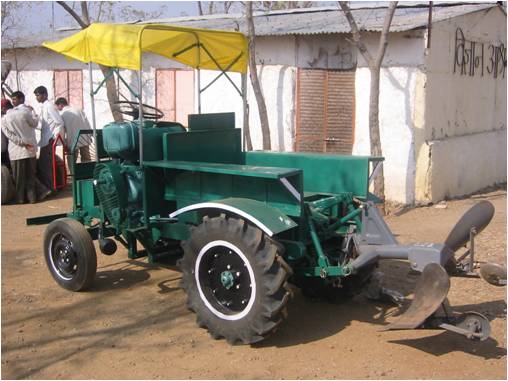
In 1983, students developed a low-cost, low-power tractor suitable for smallholder farmers--a very large group of farmers in India who cannot afford big tractors. Then in 2002, some students significantly improved upon the design. The organization decided to make the design "open source," with the idea being that any farmer anywhere could take this design and build himself a tractor.

But that's not what happened. Instead, or so the story goes, Mahindra, the largest tractor company not only in India but in the world, took the design and now manufactures and sells it, making millions of dollars in profit. (I have no idea if this is true or not. It's very possible Mahindra also came up with an affordable small tractor without any knowledge of this organization's tractor, since it seems fairly obvious that there's a large market for such a product.)


Mech Bull Tractor and agricultural equipment
The organization's tractor
A Mahindra tractor
  
This organization views this story as a huge success.

I view this story as a huge lost opportunity.

If this story is really true--if indeed Mahindra just took (I would like to say "stole," but it was open source) and modified the organization's design rather than coming up with a similar design independently--then this organization lost out on a lot of money. Not that they have the capacity to mass-manufacture, or that commercialization is their goal. I understand that their primary focus is educating their students. However, had they patented their design, they could have sold it to Mahindra and made some royalties off of the profits. That money could have been invested back in the students by improving facilities and programs, without (or with less) dependence on donors.

This organization does great work educating their students, and their students come up with clever solutions that would improve the quality of life in rural India. I understand that this organization wants to remain non-profit, but it would be really fantastic for the students to see their technologies become a reality, to see their products being sold in villages around India. And maybe these students would earn some money from the royalties and start climbing out of poverty.

Honestly, I don't see how open source technologies could work in rural India. At least not yet. How would smallholder farmers even learn that this new tractor design exists? The organization did zero knowledge dissemination, other than to post some photos and specs on their website (which a poor farmer would never see). And if the farmers did learn about the tractor, how would they go about building it without the necessary resources and mechanical expertise? I guess rural mechanics could make the tractors and sell them--but again, how would they know about the tractor?

If this organization wants to see the technologies their students develop reach the people who would benefit from them, they should consider engaging in partnerships with major manufacturers who have large distribution networks. That way the organization doesn't actually have to do the scaling-up themselves; they can continue to focus on the education. I just think that working with established manufacturers is likely to be a more effective way to disseminate technology than to make the technology open-source.

Besides, people copy products all the time in India without any consequences. Knock-offs of every type of product are super common. (Case in point: I bought a gym bag in Lajpat Nagar that has the word "Reebok" on the front and a Nike swoosh on the side.) The organization could patent the product, sell it to or partner with a company to manufacture and sell, and the product would still effectively be open-source. What's to stop a village mechanic from copying a Mahindra tractor if he wants to?

Sunday, May 26, 2013

Back in India again. And behavioral irrigation economics.

I'm back in India. Bet you didn't see that coming! It happened extremely quickly. I literally bought my flights two days before I took off. Highlights of flying Swiss Air through Zurich: free Swiss chocolate and amazing views of the Alps. Highlights of returning to Delhi: catching up with old friends and drinking mango shakes.

Two days ago, my first day back, I met with an agricultural economics researcher. He researches irrigation in Bihar and Gujarat, which is why I was meeting with him. He is interested in the groundwater economy and pumping behaviors. Like me, he finds irrigation fascinating because it lies at the energy-water-food-livelihood nexus.

I learned a lot from this meeting. For one, I learned that economics is really a study of human behavior. I guess that's obvious, but for some reason I never thought of economics that way. This makes econ a lot more interesting than what I had imagined it to be.

As I may or may not have explained before on this blog (I honestly don't remember), in eastern India where pumps are ~85% diesel- or kerosene-run rather than electric, pumps are not installed on a well. Instead, a handful of people own pumps and rent them out to their neighbors on an hourly basis, and pumps are transported on bicycles. These pump owners essentially run an oligopoly. They seem to agree on high rental rates. Interestingly, as more farmers purchase their own pumps and enter the rental business, increased competition has not driven down hourly rates, contrary to what one might expect. This researcher thinks he has learned why: the costs to the pump owner are so high he doesn't have any particular motivation to actually rent out the pump to more customers. He must deliver the pump to the well, which is a pain in the ass. A pump is a pretty heavy thing to strap to your bike. Then, the farmer who is renting the pump may or may not know how to operate the pump, so the owner has to start up the pump for him. Someone has to hang around near the pump to make sure operation is going smoothly and to add more fuel when necessary; sometimes, this someone is the pump owner and not the renter, if the renter is inexperienced with diesel engines. A pump is usually run for several hours at a time, and if the pump owner must babysit the pump for that time, he is losing out on hours that could be spent more productively (in most cases, the pump owner has his own farm to tend to). His time is pretty valuable, so he keeps rental costs high, and often he would rather have that time to do other work than rent out to another customer. Therefore more competition does not reduce prices.

Because of these high operation costs that do not even include fuel cost, according to this researcher, advances in efficiency of the pump would not make much difference to the pumping behaviors of farmers. I'm not taking into consideration all costs involved in operation. Yes, the farmers would spend less on fuel. But the time cost would remain high. Maybe if farmers are getting more water per liter of fuel or per hour, they would be able to irrigate more. But if the farmers want to translate the fuel savings into more hours of pumping, that puts a bigger burden on the pump owner. It is possible that the pump owner would raise hourly rates in response. So even if I make the most efficient pump ever, I might not have any impact on reducing operation costs. (But this doesn't mean a more efficient pump is a bad thing!) In that case, my hope should be that the farmers would get more water for the existing amount of time they irrigate. However, this increased efficiency in operation hardly matters if the pump has a higher capital cost than the cheapest pumps on the market (which, at least at this point, it certainly would). Capital cost reigns supreme over operation costs in financial decision-making. Though all the renters would benefit, the pump owner sees little advantage to his rental business to have a more efficient but more expensive pump--more demand for his pump means more work in renting out the pump, and the rental business is not his only source of income. So why bother spending money on a more expensive pump?

...I really need to learn more about economics.

In addition to enlightening me about pumping behavior and economics, the researcher confirmed something I already suspected: farmers lie about everything when surveyed. (Ok, "lie" might be too strong a word. Stretch the truth, maybe?) But I did not understand the whole picture. I had always thought that I couldn't fully trust people's answers to my survey questions because they were trying to give me the "right" answer. I thought they were trying to come up with the answer they thought I wanted to hear (for example, a woman might lie about keeping her child away from the stove while she's cooking, even if the kid sits right next to her, because she knows I would think the smoke is bad for her child's health). This is true in some cases. However, in many cases, especially when you ask about earnings and expenditures, people exaggerate to make themselves seem poorer. Says the researcher, "They see you, a white woman, or me, a city guy, and they think 'this person works for some NGO and is going to go back to Delhi and write up a report about how we need more subsidies or government assistance.' So they exaggerate how poor they are in order to get more money." Even if a fellow villager is taking the survey, the fact that the survey is taking place at all alters people's answers.

This is a very cynical point of view, and I assume this isn't true for every single person interviewed, but I can believe this does happen sometimes. Probably this behavior stems from a history of NGOs advocating for more government assistance based on field surveys. Like how kids in Kerala constantly ask white tourists for pens because about a decade ago an American group donated supplies to local schools there. (This researcher does not deny that these people are indeed very poor or in need of assistance, by the way.)

So how does this researcher deal with the untrustworthiness of survey responses? "Just add error bars. Uncertainty is part of the fun of social science! See, you want accurate numbers. That's why you're an engineer. You like precision. You don't get the same precision in social science, and you have to be willing to work with that." Well, we use our fair share of error bars in engineering, too. But I guess I see his point.

(To be fair, his research is not all wishy-washy. He gets real numbers when he can: he acquires irrigation data from electricity meters, flow meters, pressure gauges, etc. like an engineer would. But questions of income and costs are a lot trickier to answer in a village where people don't have good records. No receipts, bills, paychecks, etc. Without any paper trail, you have to take people at their word.)

I have been thinking recently about switching into the social sciences (maybe economics or public policy) (this is a topic for another post). But as someone who has training in engineering, will I find the fuzziness frustrating? Or will I find it to be an exciting puzzle to be deciphered, the way this researcher does? I have a lot to think about re: my future.

(As a side note, this researcher got his master's at Princeton and his PhD at Harvard. To those of you interested in studying public policy with a focus in international development, he recommended Harvard over Princeton.)

In other news, I noticed in my blog stats that I get a lot of traffic from a seemingly random blog out there in cyberspace. Apparently, a blogger named Vikram Garg called my blog "the best American in India blog." Thanks for the shoutout, Vikram. Shouting right back at ya! Check out his blog at http://vikramvgarg.wordpress.com/.